



The gunfire didn’t stop in 2025, but it quieted, more than it has in years.
Pittsburgh recorded 35 homicides last year, the fewest since at least the turn of the century, part of a broader regional and national downturn in violent crime.
From New York City and Los Angeles to Pittsburgh and Philadelphia, fewer lives were lost to homicide in 2025 — a shift that police and elected leaders say reflects focused prevention and fragile momentum as the nation continues rebuilding after the covid-19 pandemic.
“It’s not that there are more cops on the street. There are less. And it’s not that there are fewer guns,” Erin Dalton, Allegheny County’s director of Human Services, told TribLive this week. “All the things that weren’t structured for a period are better, they’re improved. Violence begets violence. And a lack of violence begets a lack of violence.”
The downward trend played out in Pittsburgh’s suburbs, as well.
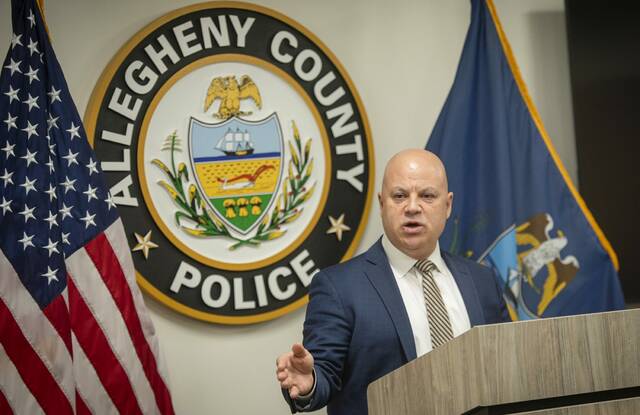
Allegheny County Police investigated 36 homicides, the fewest since 2011. In 2024, by comparison, county police investigated 64 homicides.
Stowe and McKees Rocks, municipalities that share a school district, reported eight homicides in 2024, one of the highest totals in the region. That year, McKees Rocks — known to residents as just “the Rocks” — was named the most dangerous city in Pennsylvania by websites that aggregate crime data, such as CrimeGrade.org.
Things there started shifting last year, public safety advocates told TribLive. The two communities ended 2025 without a single homicide.
In Westmoreland County, meanwhile, the number of homicides rose to 10, according to the district attorney’s office, matching levels seen in 2022 and 2016.
There were six killings in the county in both 2023 and 2024, according to coroner’s statistics and Pennsylvania State Police crime data.
Last year’s increase in violence aside, Westmoreland County Commissioner Doug Chew remains positive.
Westmoreland County is “one of the safest places to live in the area,” Chew told TribLive on Friday.
“My understanding is the majority of these murders occurred between people knowing each other and were not the result of random crime that would put the public in danger.”
‘Rare’ good news
In 2025, violent crime dropped across the board, sometimes dramatically.
Nonfatal shootings, aggravated assaults and sex offenses all decreased in Pittsburgh, data shows.
Aggravated assaults and burglaries were down in Allegheny and Westmoreland counties.
Homicides also were down in Beaver, Butler and Washington counties, according to state police data.
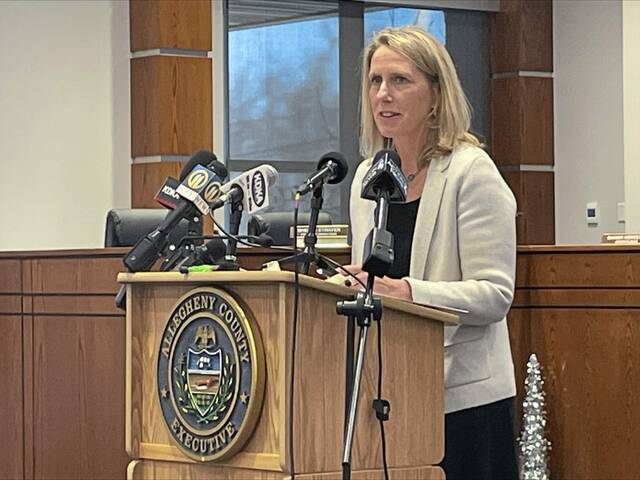
“It is rare that we get to celebrate good news when we’re talking about violence in the community,” Allegheny County Executive Sara Innamorato told TribLive, “but seeing such a significant reduction in nonfatal shootings and homicides is, in fact, something to celebrate.”
Innamorato touted the county’s “multi-pronged” efforts to clamp down on crime. Its human services department pledged at least $50 million over five years to fund health programs, work in schools and conduct violence interruption efforts on the streets.
Who deserves credit?
Proactive policing and anti-violence efforts moved the needle within city limits, Pittsburgh Mayor Ed Gainey said.
The outgoing mayor’s administration funneled $10 million a year — a nearly 40% spike over his predecessor’s final figure — to the Stop The Violence Fund, which provides grants to nonprofits and programs combating the root causes of violence.
“These strategies reflect my belief that safer communities are built not through one program alone but through sustained partnership, accountability and investment in people,” Gainey told TribLive. “The historic decline in homicides shows that this approach is working and that continuing it is essential.”
At least one statistician told TribLive, however, it’s difficult to say who can take credit for plunges in crime.
“Yes, Pittsburgh is very much following the national trend … but the ‘why’ of this happening is a more nuanced story,” said Rohit Acharya, a nonresident fellow at U.S. think tank Brookings Institution who is based in Pittsburgh.
“We should celebrate the numbers and be optimistic,” he added. “But, at the same time, we should also not be so quick to assign attribution until we get more data.”
The drop in homicides played out nationally, with some cities reporting record-low numbers.
Three-quarters of the largest 100 cities in the U.S. reported drops in homicides last year, according to information from the Real-Time Crime Index, an online database that collects crime data from hundreds of federal and municipal agencies nationwide.
Philadelphia reported its lowest homicide numbers in 60 years. In Baltimore, fewer homicides were reported in 2025 than any year on record. Killings also declined in New York City, Chicago and Dallas, as well as in Rust Belt cities like Cleveland, Buffalo and St. Louis.
People behind the numbers
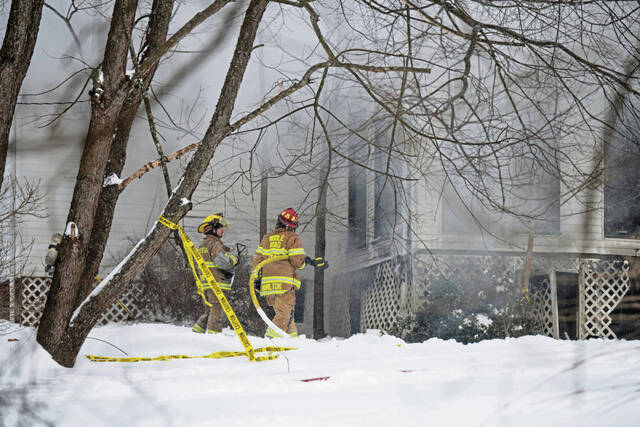
In Southwestern Pennsylvania, last year’s murder victims included a grandmother killed by her daughter, a 10-month-old boy who police say was abused by his mother’s boyfriend, and a South Hills teen killed in a fire after her father allegedly doused their home in gasoline.
Most murders happened at night — one-quarter of them between 8 p.m. and midnight, data shows.
Black men and women represent 13% of Allegheny County’s population but made up 72% of its homicide victims last year. In Pittsburgh, they accounted for 88% of murder victims.
Nearly nine out of every 10 homicides last year were shootings.
Beneath the cold numbers were stories of tragedy, some especially harrowing.
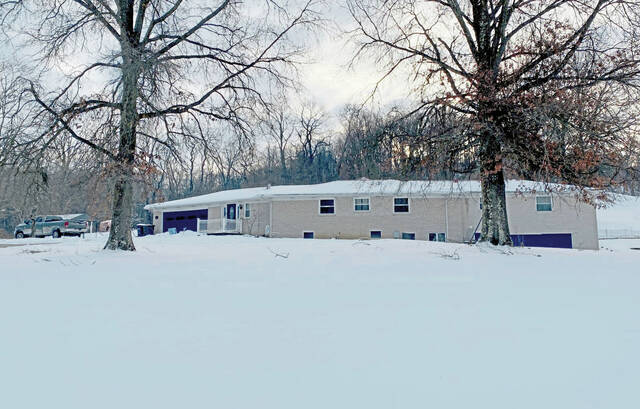
Last January, a Hempfield man, Paul Swarner, fatally shot his wife and their two children before turning the pistol on himself at their home on a private one-lane street east of New Stanton. The killings marked the first homicides of the year in Westmoreland County.
After police arrived and discovered the bodies, a neighbor stood on his front porch and struggled to hold back tears.
“Oh, it’s just terrible,” Dick Shawley told a TribLive reporter. “It’s just unconscionable.”
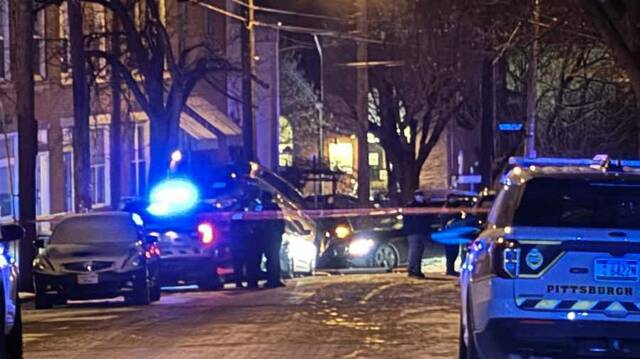
On Feb. 20 in Pittsburgh’s Garfield neighborhood, police were dispatched to a car crash — but ended up filing reports on two murders.
Officers found a man and a woman dead inside a sedan that had crashed into a parked SUV. Both Dameon Hill, 35, of Garfield and Taquaila L. Daniels, 24, of the city’s Crawford-Roberts neighborhood had been shot in the back of the head.
A 2-year-old boy was found alive in a car seat in the vehicle.
On June 21, Pittsburgh police responded to reports of gunfire around 1:30 a.m. in the city’s Lincoln-Lemington-Belmar neighborhood. Officers found an Ohio man bloody and groaning in the driver’s seat of a parked vehicle. The victim, Christopher Kovach, 35, died the next day.
A witness told police Kovach planned to sell marijuana in Pittsburgh to a man with whom he had spent time in federal prison, according to a criminal complaint.
Kovach brought a handgun because he believed “that the deal might go sideways,” the witness told police. Shell casings from three different guns were found at the crime scene.
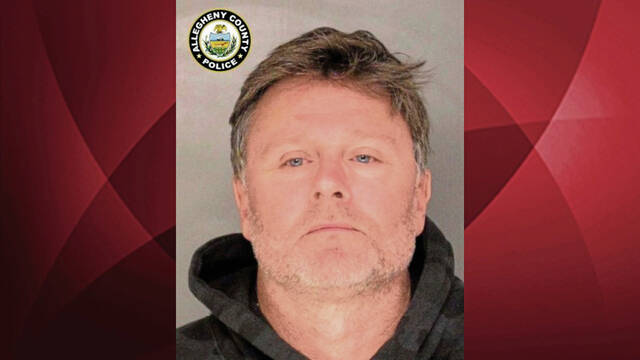
The alleged assailant — Daevone Brown, 30, of McKeesport — was arrested four months later.
Brown’s trial is set to begin in February.
Success in Sto-Rox
Public safety advocates say the tide is turning in McKees Rocks.
Just a few years ago it was considered to be one of the state’s most dangerous towns.
McKees Rocks’ violent crime rate in 2023 and 2024 roughly doubled the national average, FBI data show.
When people visited the borough of 6,000 residents along the Ohio River, they were greeted with a 1-in-20 chance of becoming a crime victim.
But 2025 brought a statistic McKees Rocks and its neighbor, Stowe, haven’t seen in 15 years. Homicides dropped to zero.
This summer, the two communities went 77 straight days without a shooting.
“You do notice: ‘There hasn’t been a shooting in a long time,’” said Kevin Platz, who runs Focus on Renewal, which offers behavioral therapy to high-risk individuals and those with criminal records in McKees Rocks. “It becomes kind of an addiction. Then, everybody starts to notice.”
‘Night and day’
Stowe police Chief Matthew Preininger noticed.
He said increased foot patrols by his officers, as well as work on the ground by a number of nonprofit groups, helped contribute to the shift in violent crime.
But Preininger said he also used a different measuring stick: the number of times Allegheny County police Lt. Venerando Costa, who heads the force’s homicide unit, came to his station.
“At one point, he was down here every other week. I joked with him: ‘We need to get you an office down here,’” Preininger told TribLive Thursday. “But I haven’t seen Lt. Costa all year. And when I don’t see him, that’s a good thing.”
Bridget Clement runs a group that works with eight violence interrupters, who walk Stowe and McKees Rocks streets in bright-green T-shirts and try to mentor young adults and build positive networks.
She sees in data the proof that violent crime trends are shifting there.
“It’s strange but the gun violence came down really quickly,” said Clement, executive director of Pittsburgh Area Community Schools, which works alongside the violence interrupters. “In a year, it was night and day.”
“There are things happening in the Rocks for the first time in a long time,” added Focus on Renewal’s Platz. “And we hope that tide rises all ships.”
Better tech, fewer guns
There’s no single way to thwart violent crime, according to Pittsburgh police Commander Brian Schmitt, who oversees the bureau’s homicide unit and its 24 detectives.
But maintaining a high clearance rate — the percentage of cases solved — can act as a deterrent, Schmitt said.
Last year, Pittsburgh’s homicide detectives cleared 32 homicides, eight of them from previous years, Schmitt said. That’s a 91.4% clearance rate, nearly double the national average.
Clearance rates also went up in Allegheny and Westmoreland counties.
Technology helps, Schmitt said. Gunshot detection systems get officers to crime scenes faster. License plate readers and a network of city cameras buttress increasingly sophisticated detective work.
Getting guns off the streets helps, too.
Last year, the bureau’s Violence Prevention Unit confiscated 153 illegal guns — a 44% jump over a year earlier. (The unit was launched in February 2024.)
Schmitt understands there are peaks and valleys in the fight against violent crime. He takes the long view.
“We kind of go through these waves where we see drops in violent crime, then we see increases,” Schmitt said.
Raised in Jennerstown, a Somerset County hamlet of 700 residents, he joined Pittsburgh’s police force in 2005. His first assignment was patrolling the Hill District — “a little culture shock for me,” Schmitt said.
He knows it’s impossible to make Pittsburgh as safe as his hometown, but that won’t stop him from trying.
“The ultimate goal is to see zero homicides,” Schmitt said. “But that’s a tough number to get to.”